Repairs, Re-leveling & Sealing

Interlock Repair, Re-leveling & Sealing

Fix sunken pavers, replace polymeric sand, power-wash and seal existing interlock.

You don't always need a new patio. If your interlock has sunk near the house, heaved at the edges, or grown weeds in every joint, we lift the affected pavers, rebuild the base underneath, relay them and re-sand the joints.

Common repairs

Sunken sections (usually near downspouts or where a trench was backfilled), heaved edges from a missing edge restraint, settled steps, and washed-out joints. We fix the cause, not just the symptom, so it does not come back next spring.

Restoration: clean, re-sand, seal

A restoration visit power-washes the surface, removes old joint sand, installs fresh polymeric sand, and applies a penetrating or wet-look sealer. It makes 10-year-old interlock look new and it is a fraction of replacement cost.
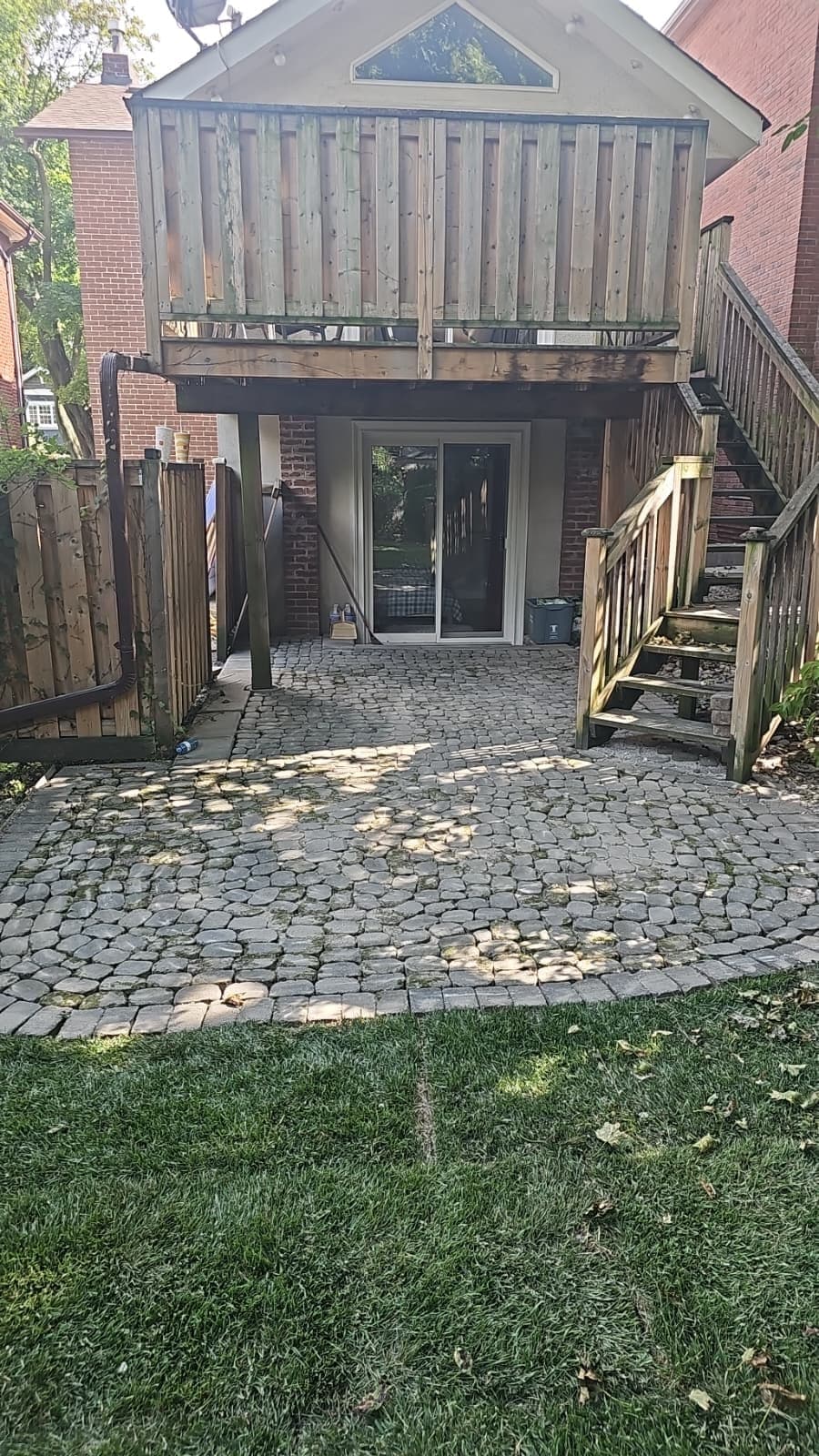
Cobblestone paver patio beside fresh sod at the house wall
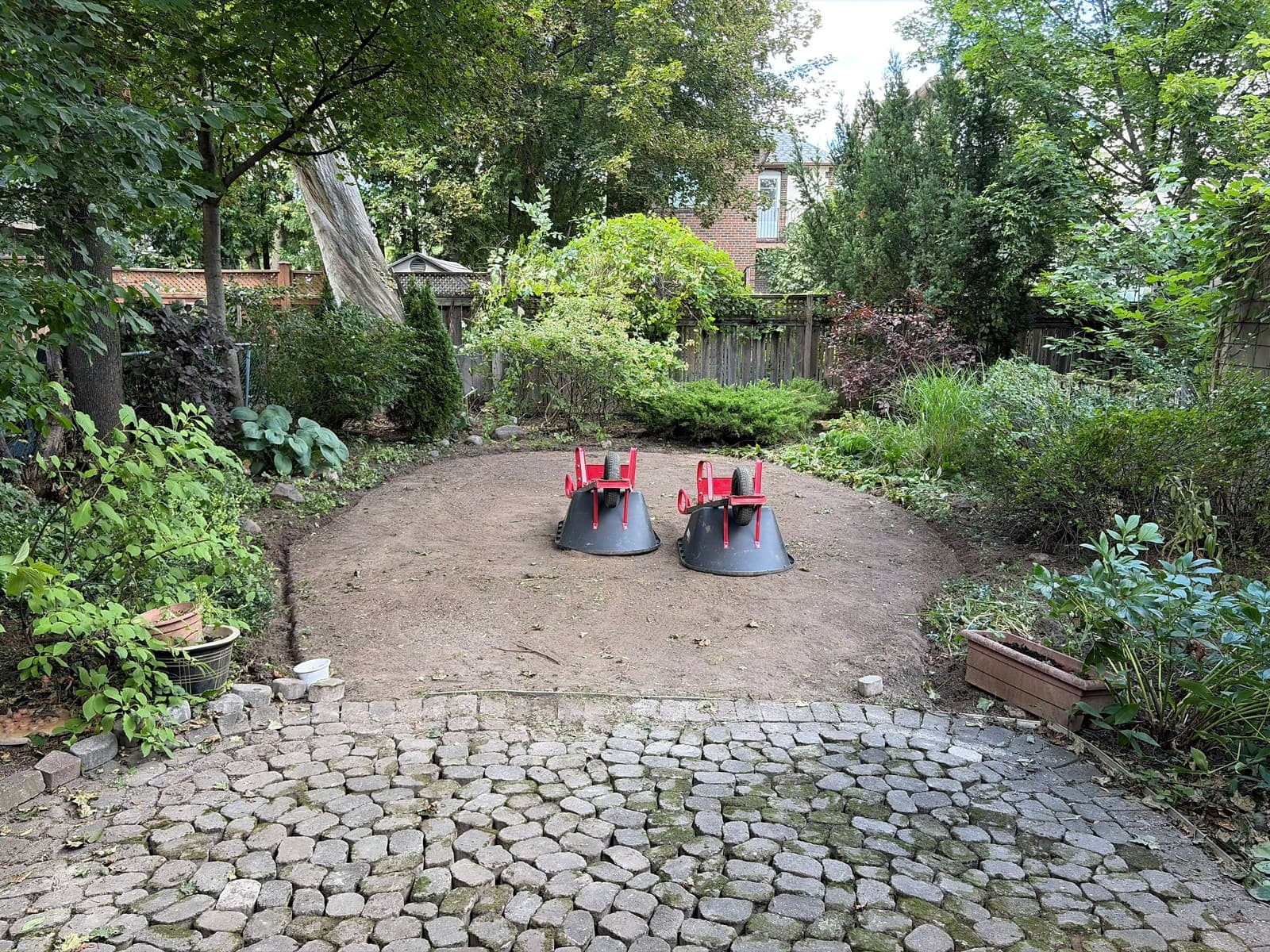
Cobblestone pavers being re-laid on a screeded bedding layer
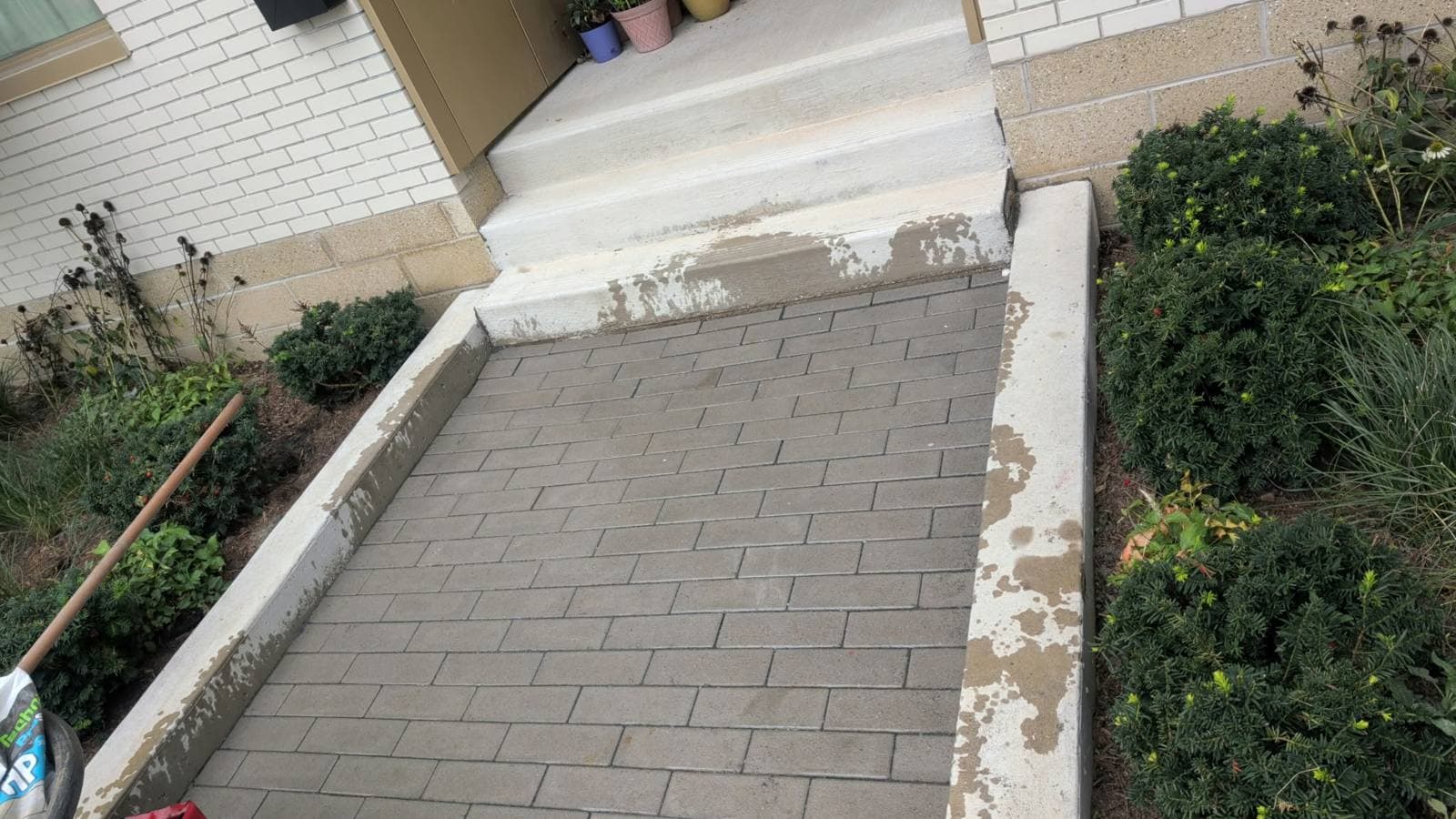
Re-laid paver landing at the foot of a front step, with new concrete border caps
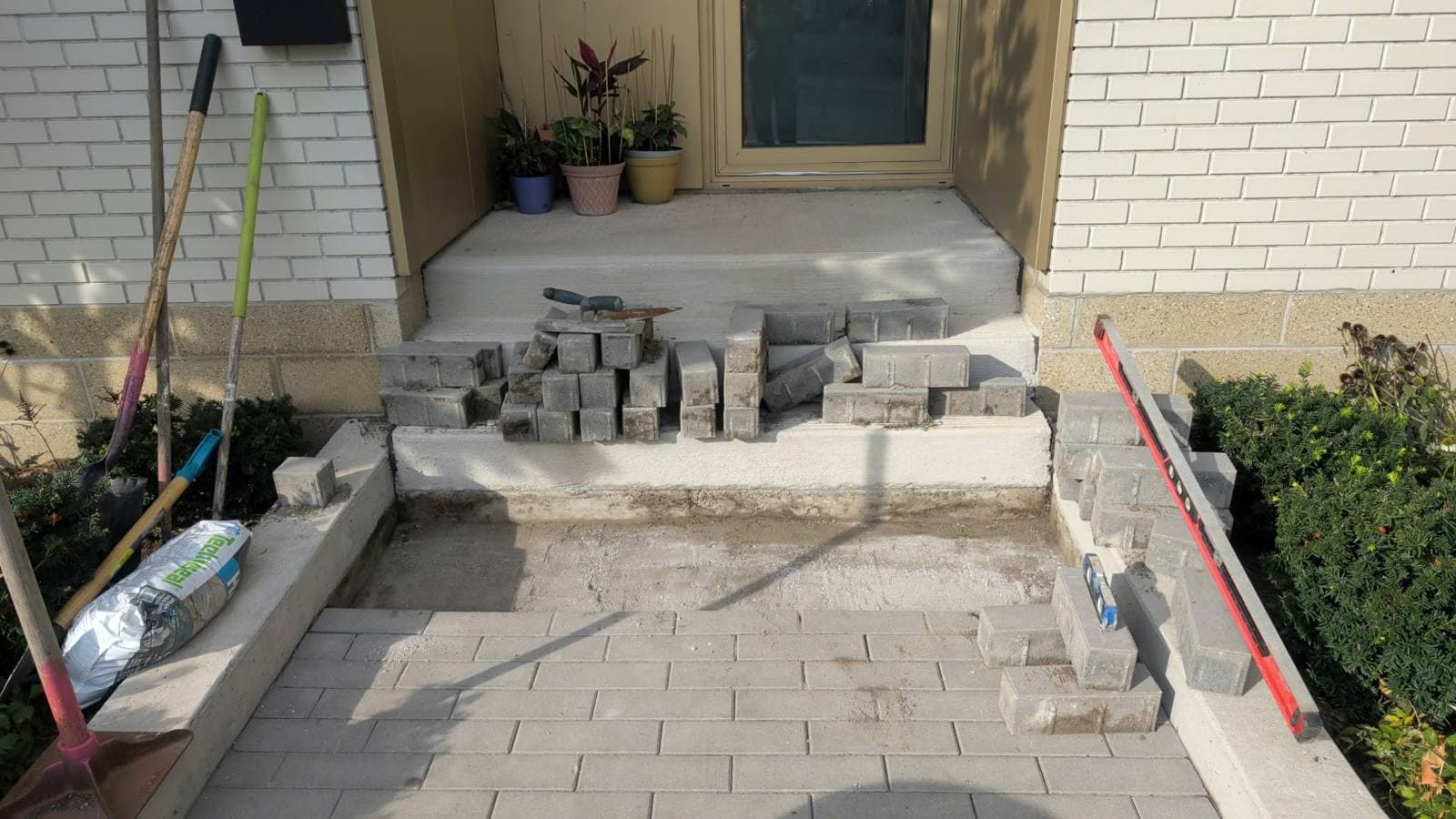
Front landing mid-repair: pavers lifted and stacked on the step, base exposed, level on the border

What’s included

  • ✓Diagnosis of the cause
  • ✓Lift and re-base sunken areas
  • ✓Relay with matching pavers where needed
  • ✓Edge restraint replacement
  • ✓Polymeric sand
  • ✓Optional power-wash and sealing

Pricing

Spot repairs start at $650. Full clean, re-sand and seal is typically $3 to $5 per sq ft. See the pricing page for what moves the number.

Twenty winters in one scroll
Year 0
Day one. They look identical.

Same pavers, same pattern. From the driveway you can't tell them apart. The difference is all underground.

Thin base, never compacted, no edge
Deep base, compacted in lifts, locked edges
Build mine the right way

An illustration, not a measurement or a warranty. Our base: 6 to 8 inches for patios, 10 to 12 for driveways, fabric on clay.

Finished repairs, re-leveling & sealing jobs
All projects

Repairs, Re-leveling & Sealing FAQ

Can you match my old pavers?

Often. We keep relationships with the major suppliers and many lines are still made. If not, we relay your existing pavers and use the new ones in a low-visibility spot.

How often should interlock be sealed?

Every 3 to 5 years, depending on sun and traffic. Sealing is not required, but it keeps colour and slows weeds and ants.

Homeowner guides
All guides
Where we build repairs, re-leveling & sealing
Free Quote☎